02 - Organisational Behaviour - IAAIO
02 - Organisational Behaviour - IAAIO
Economic strategies
Focus on the drive for economic value through though, top-down, results driven action.
They involve the imposition of technical solutions to problems that undermine organisational effectiveness.
Involve solutions such as:
- Restructuring
- Reengineering
- Drives for efficiencies
- Layoffs
Often through large number of consultants.
May not guarantee long term success
Organisational development
Focus on creating capabilities required to sustain competitive advantage and high performance
They include:
- Coordination and team work
- Commitment and trust
- Competencies (technical and leadership)
- Open communications
- The capacity for constructive conflict
- Learning
Beer's third way
A drive and development approach
Change strategies that are capable of delivering sustained high performance require:
- Development of a vision that offers a compelling and balanced business and OD direction
- The management of key stakeholders to buy time to develop organisational capabilities
- The adoption of a socio-technical approach that involves the development of down the line managers
Top managers are often reluctant to adopt a combined strategy.
They often have a mind-set that favours a top-down drive for results. The three key aspects of this mind-set are:
- Shareholder interests
- The assumption that the organisation's technical (rather than social) systems determine performance
- Assumption that there is little to be gained from dialogue with employees
Shaping implementation strategies
Successful change strategies need to be internally consistent. They need to be compatible with key situational variables such as:
- Stability of external environment:
- Urgency and stakes involved
- Level of support
- If support for change is low, those advocating for change need to develop strategies to deal with that
- Degree to which stakeholders trust those leading the change
- Extent to which change managers have access to all the information they need
- Alignment of values
- Variations over time
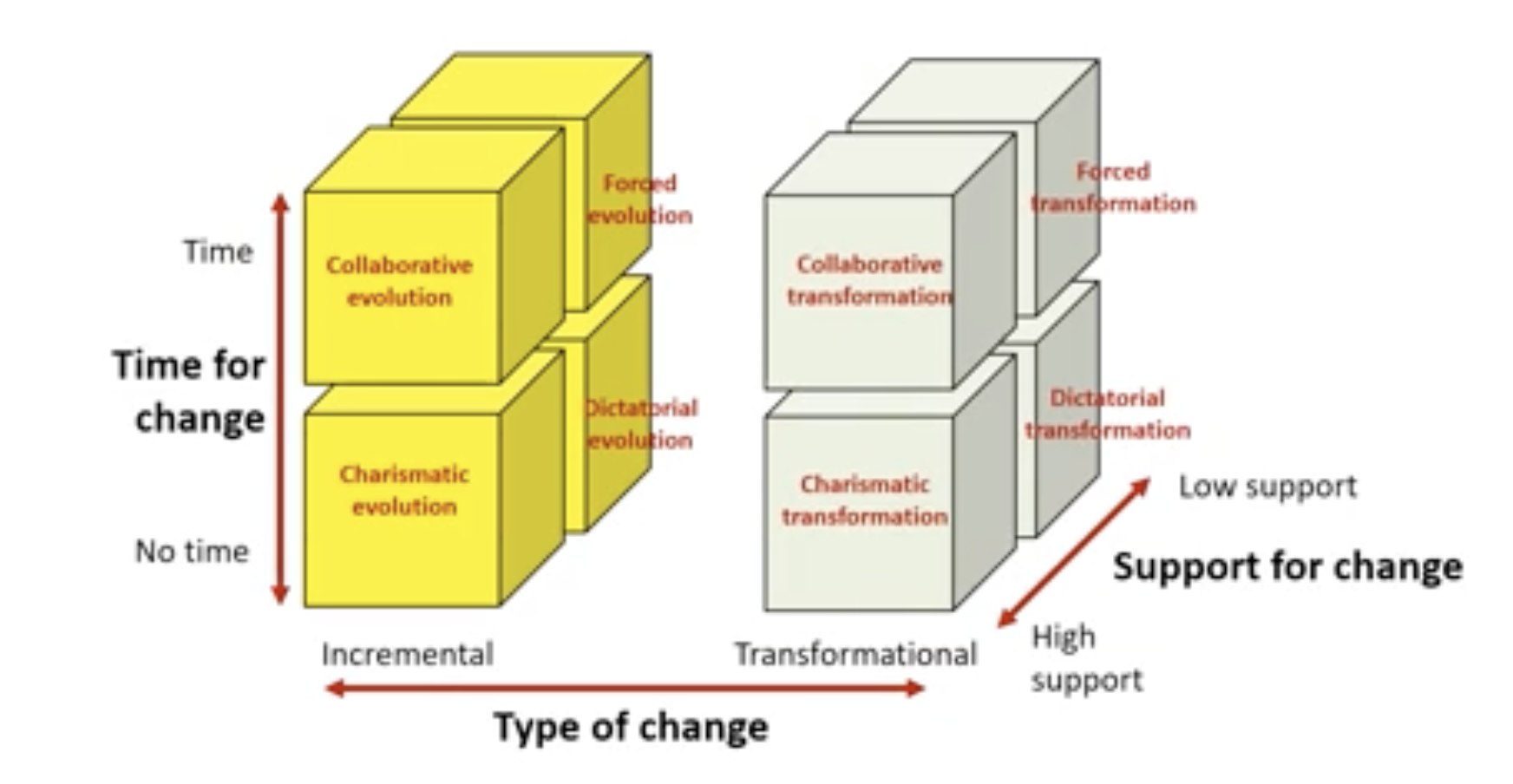
Contingency model for shaping change strategies
3 vars:
- Type of change:
- Incremental
- Transformational
- Time of change
- Time
- No time: greater the urgency, the more there is a feel for top-down change
- Level of support
- Low - Top-down strategy may be required
- High
Short vs long term strategy
In short term, there might be the need to force a change.
Implementing change
Implementation shifts the focus from planning to action
Sometimes, it's a one-off stand-alone step in the change process.
Usually implementation unfolds as an ongoing iterative process. The change has to unfold as a tentative way as a series of incremental steps.
In different circumstances, those leaeding a change may envision an end state, but encounter resistance from others who block the planned implementation and force a change of direction.
If the attempt to implement a plan, fails to deliver anticipated outcomes, this failure can provide those leading the change with new insights: implementation becomes diagnosis.
These insights inform new plans that are then impelemented.
Quality of diagnosis
- Range and complexity of issues
- Fragmentation of data colelction
- Access to info
- Mindset of those leading the diagnosis
- Pressure to complete the diagnosis quickly
Clarity of planning
Often is a 2 step process:
- Develop high level plan
- Formulate detailed task-specific plans that can be implemented on a project by project basis
Managing communications to minimise ambiguity
Ambiguity leads to confusion and untrust. But sometimes clear communication is absent when there is fear that conditions change and what was said becomes false. Also, commercially sensitive info may be leaked.
Managing stakeholders
Those implementing change need to be aware of the political dynamics in the situation.
Those leading the implementation need to communicate in a way that promotes a shared sense of direction and aligns people so that they can work in a coordinated way to implement the new vision.
When a change is complex, the resulting fragmentation may make it difficult to coordinate progeress. this can cause confusion and waste.
Trust and procedural justice
If people feel have been treated fairly there is less opposition.
Adopt respectul managing practices. Pressure to deliver quick wins, may cause leaders to adopt a directive push management style. A heavy handed approach may not be effective, especially when managing those who feel vulnerable.
Reviewing progress
those implementing the change need to be aware that even if the plan is being implemented as expected, the outcomes may not be htere.
This is due to:
- lack of commitment and motivation
- reward system that penalise new behaviour
- inflexible organisational structures
- lack of support from those who are able to sabotage the project
- insufficient resources
Seeking feedback
It can signal a need to change how the plan is being implemented.
Sometimes, we realise unwanted outcomes too late
Monitoring change
Monitoring helps:
- To adapt the plan
Plans are developed based on broadly defined goals. After each step, review is necessary.
Reviewing blue print change
Sometimes, those managing the process, give insufficient attention to monitoring and review.
They take the validity of the plan for granted. They may not review the assumption of what is changing, but only on how is changing.
Cause and effect hypothesis
ex: employee satisfaction --> commitment --> customer satisfaction --> customer loyalty --> Revenue growth and profitability
Transform this into a strategy: employee satisfaction is an operational goal that can be measured.
If the change is intended to increase profitability, maybe, the change is to increase employee satisfaction. Possible interventions to achieve this:
- Redesign jobs to provide employees with greater autonomy, challenge and sense of achievement
- Encouraging supervisors to help employees voice their views about opportunities and threats
- Monitor whether the selected interventions are being implemented as intended
- Monitor whether the interventions are having the desired effect on employee satisfaction and commitment
- Monitor whether improvements in employee satisfaction and commitment are having a positive effect on customer revenue growth. Is the change plan still valid?
Tools for Change Management
- [[#Force Field Analysis]]
- [[#Gap Analysis]]
- [[#Stakeholder Grid]]
- [[#Responsibility Charting]]
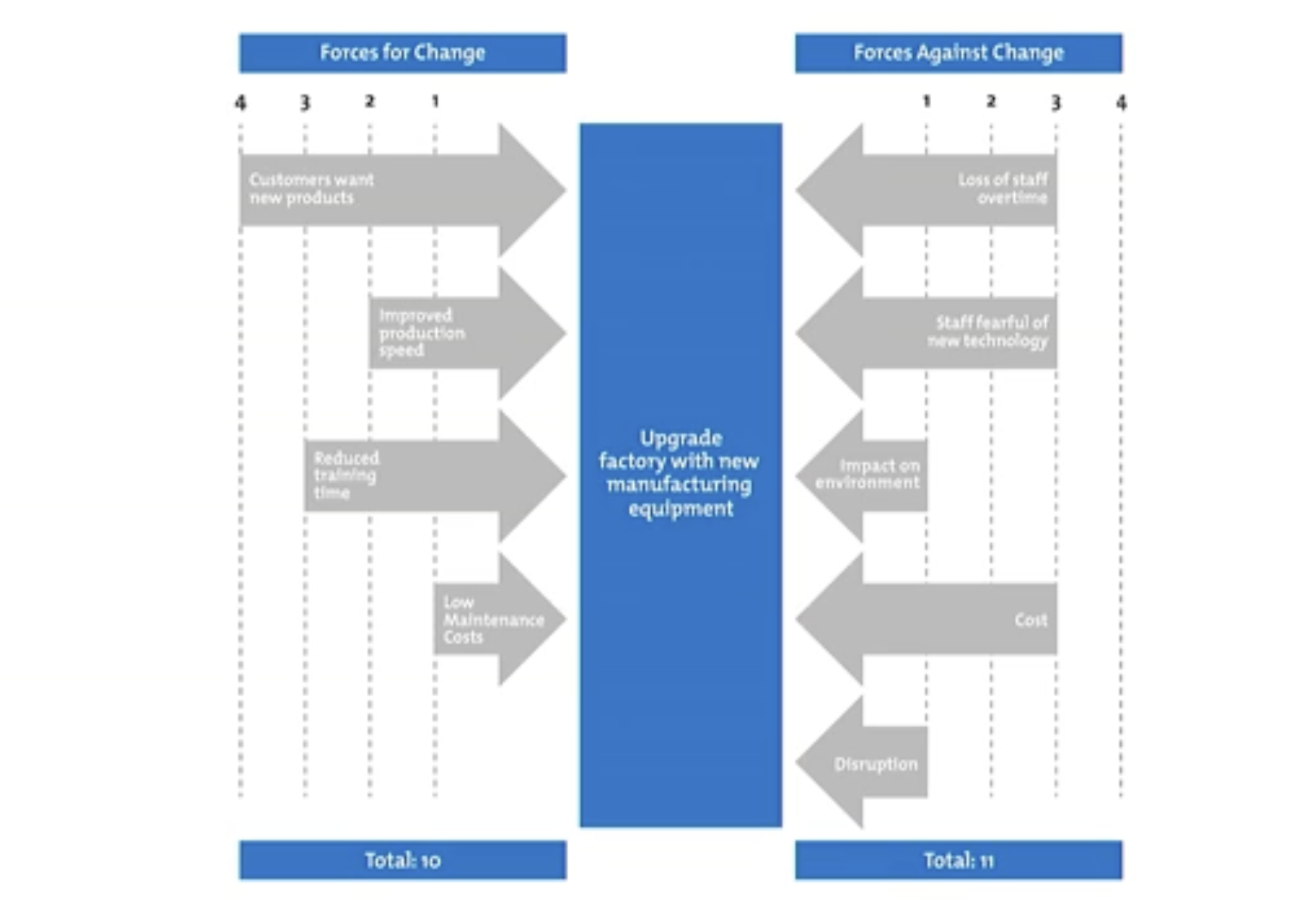
Force Field Analysis
Identify forces for and against change.
In stable condisitons, the forces are balanced. To bring change, we need to create imbalance:
- Adding new driving forces
- Strengthening driving forces
- Weakening restraining forces
- Converting restraining forces into driving forces
Gap Analysis
Identify the gap between current state to the desired one.
- Pinpoint gap
- Focus energy and resources
- Includes hard (structure) and soft (values, attitudes) elements
- Be specific and dig for root causes
Stakeholder Grid
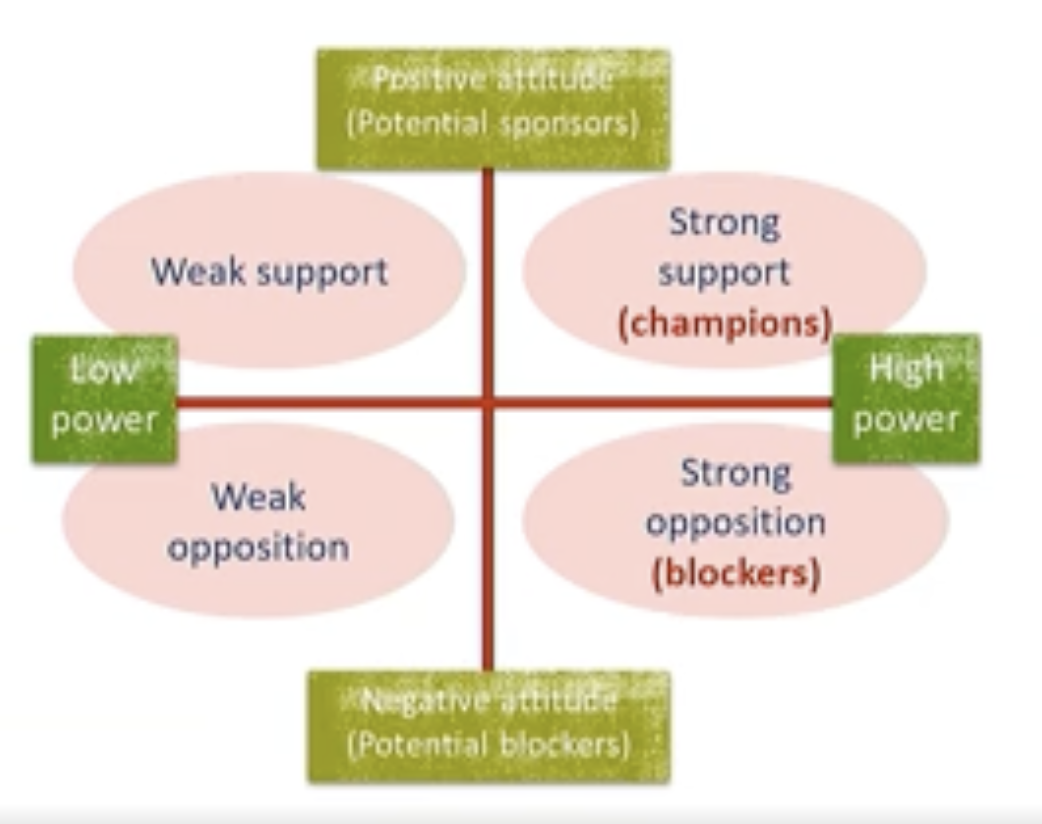
3 steps:
- Identify the stakeholders: all that can be affected
- Assess how much power each group has
- Assess stakeholder attitude towards change
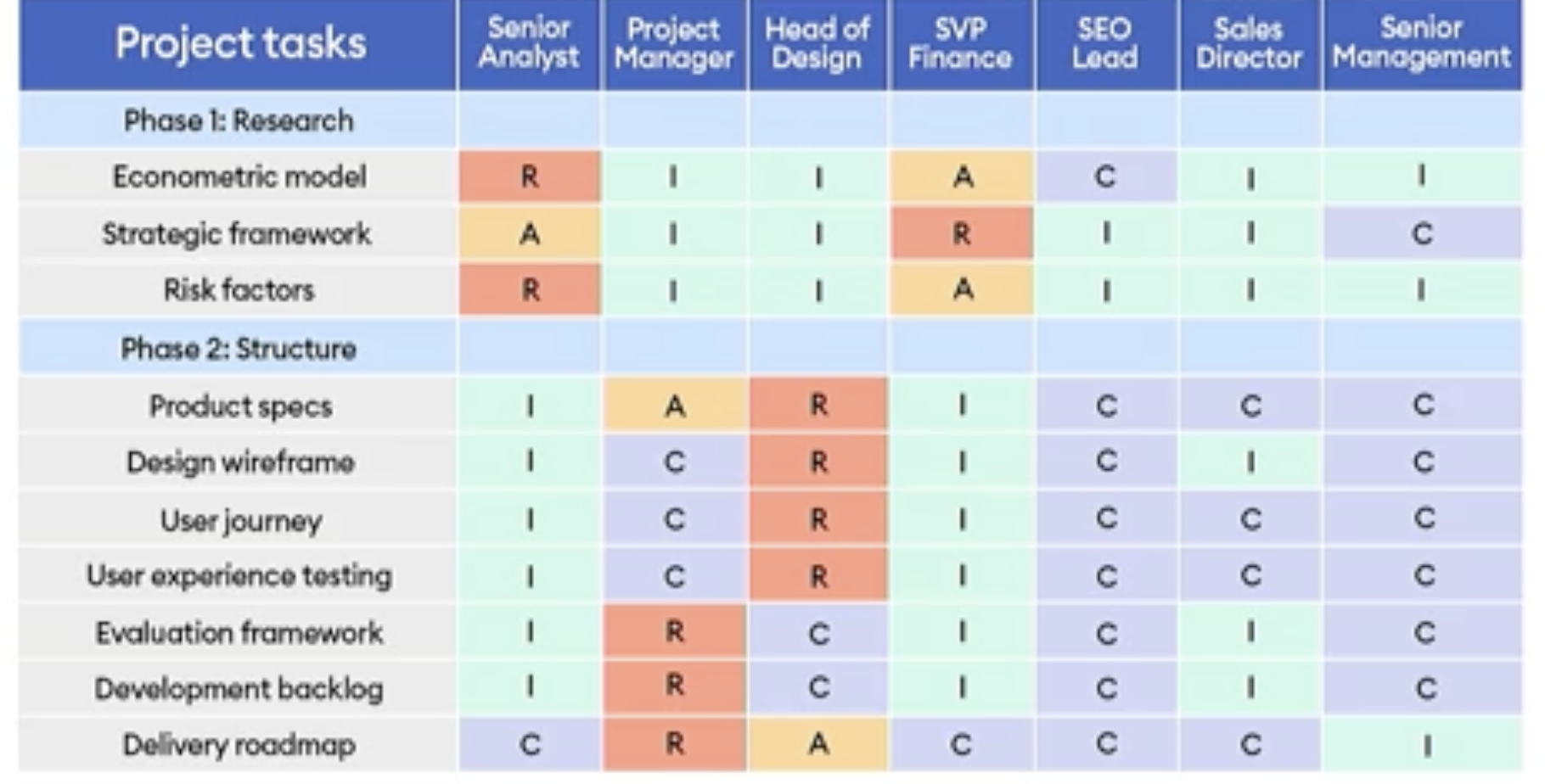
Responsibility Charting
all stakeholders are listed and rated as:
- Responsible
- Who does the work to complete the task
- Accountable
- Delegates the task and make sure people complete work in time
- Consulted
- Provide input and feedback on the project
- Informed
- They are not decision makers but need to know what's going on
Example:
Developing a Change (Action) Plan
The hardest part during change is control.
Going from A to B, through intermediate step C.
Plans need to attend to 9 key points:
- appoint a transition manager
- specify change objectives
- identify what needs to be done
- shaping the implementation plan to maximise stakeholder engagement
- identify multiple and consistent leverage points
- schedule activities
- provide needed resources
- reward system
- develop feedback mechanism
1. Appoint a transition manager
Might be:
- Senior manager
- Project manager or external (temporary)
- Person in charge now
- Person in charge after transition
The best person depends on the type of change.
They need
- Sufficient power to allocate resources.
- Respect of existing leadership
- Ability to win support and commitment rather than provoke resistance and compliance
Fragmentation
Often steps in change are allocated to different people, that might give priority to different objectives.
Feedback loops are restricted.
2. Specify change objectives
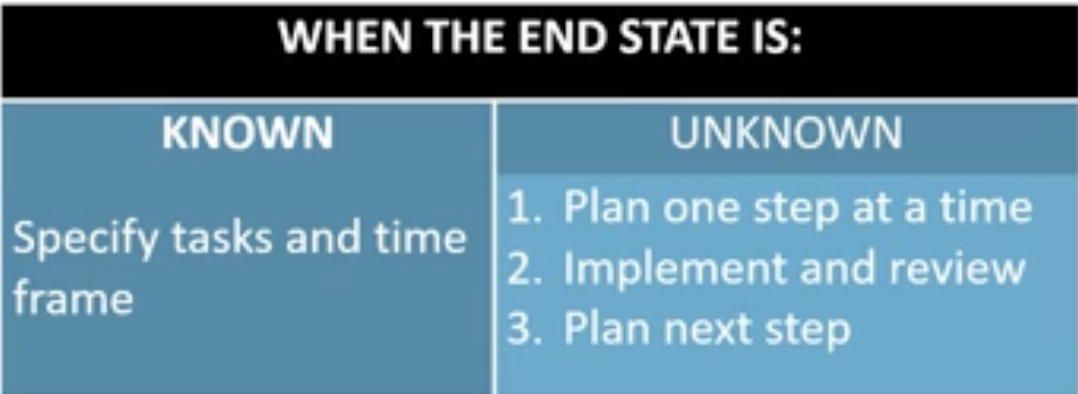
Sometimes is difficult to articulate what the final state is supposed to look like.
3. Identify what needs to be done
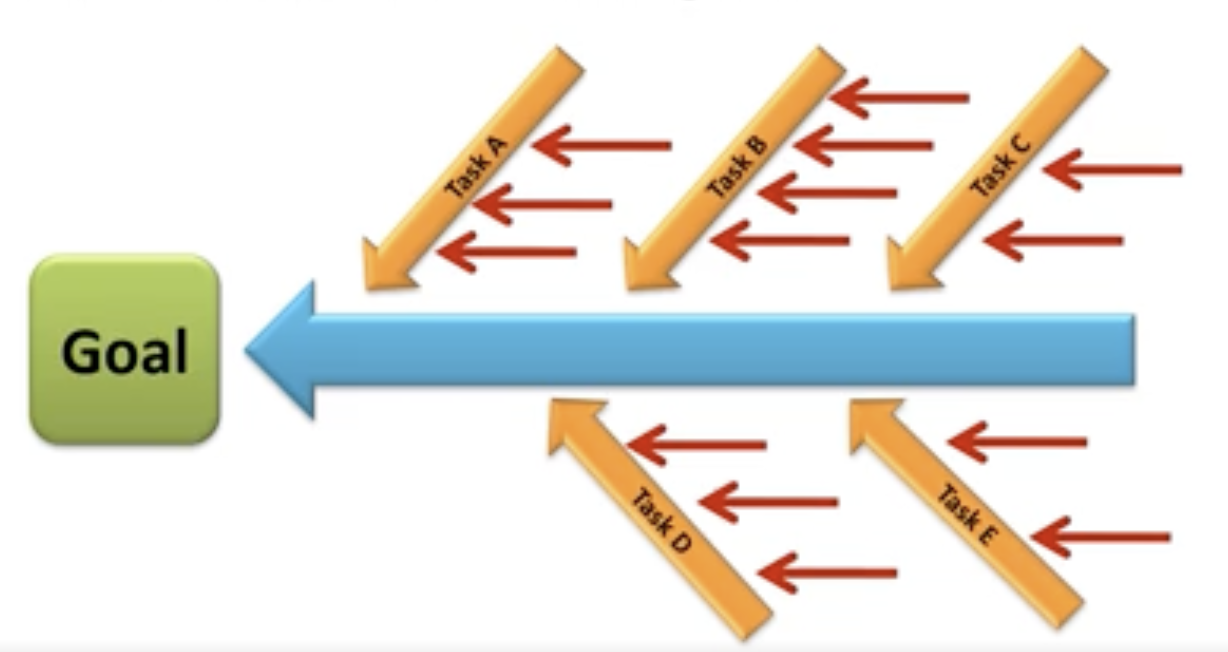
It's useful to use a fishbone or Awakishi diagram.
4. shaping the implementation plan to maximise stakeholder engagement
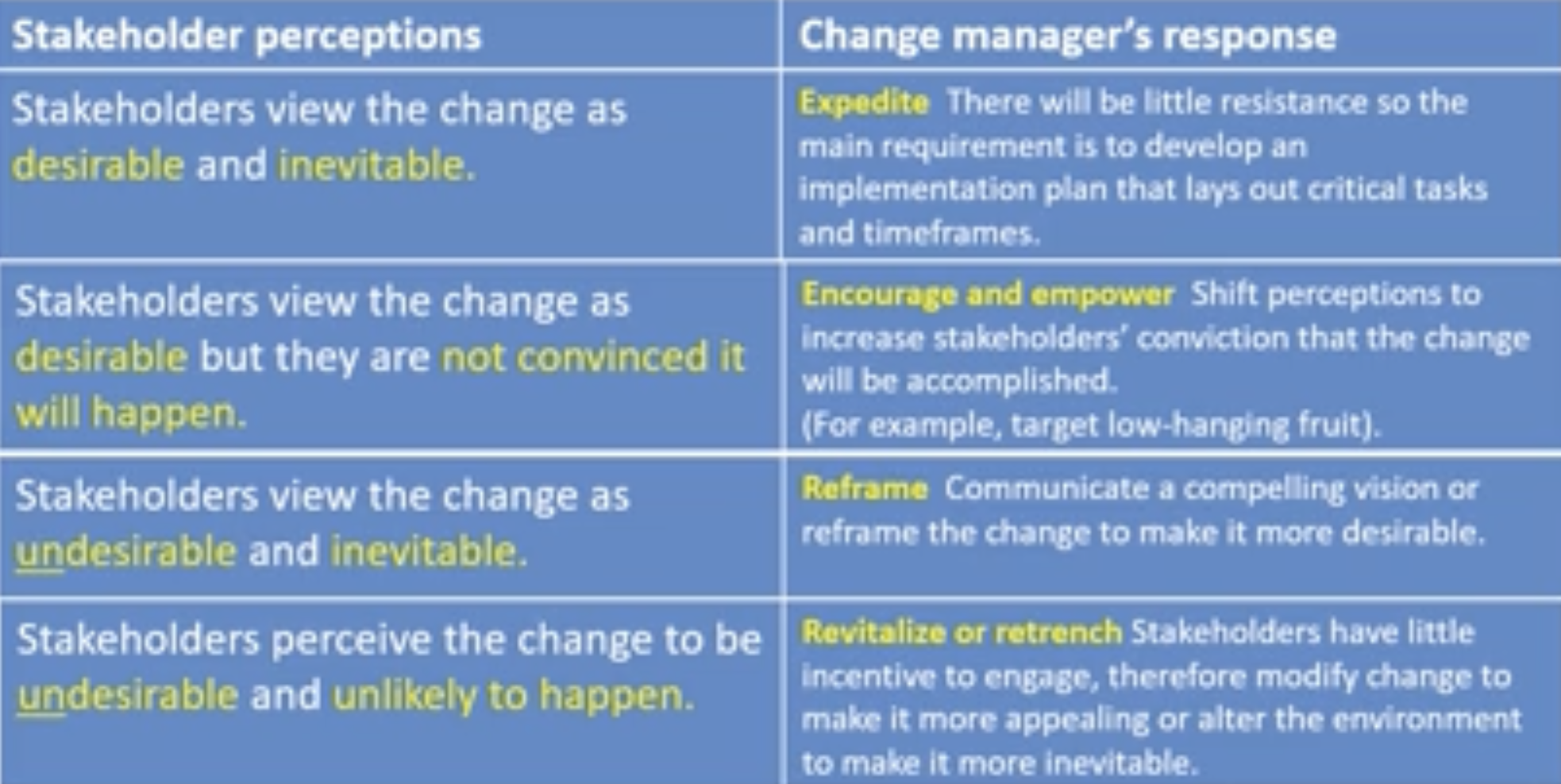
Change managers need to take into account stakeholders' perception of:
- Likelihood that the change will actually happen
- Desirability of the change
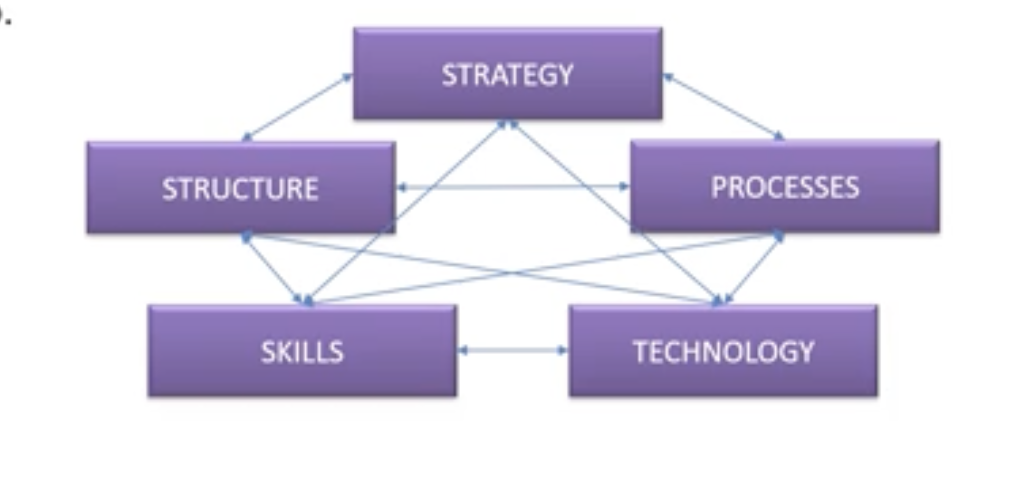
5. Identify multiple and consistent leverage points
6. schedule activities
A useful tool is critical path analysis
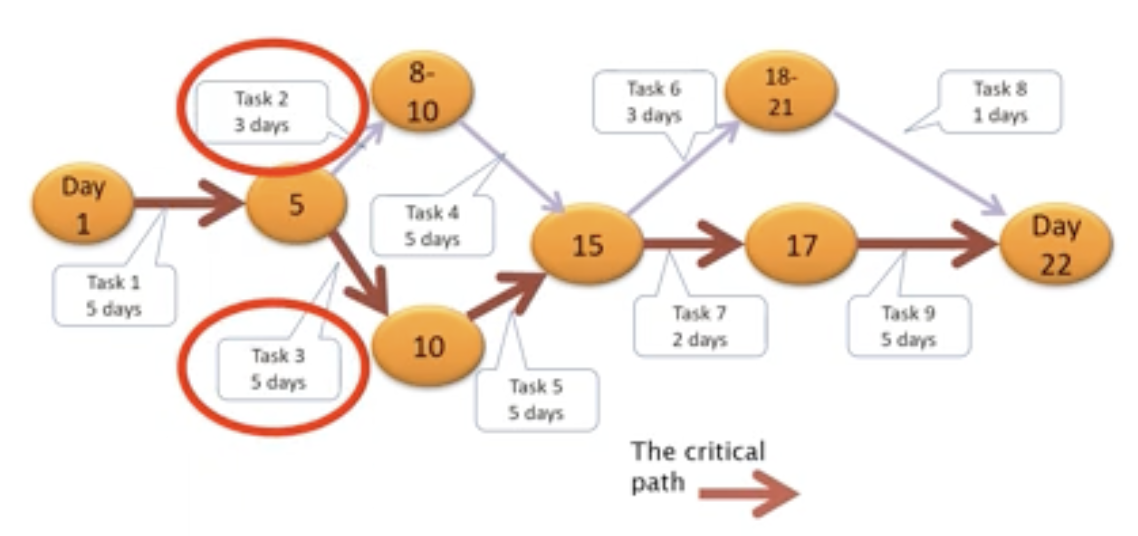
It shows tasks that can be done in parallel and how long it takes to do them.
It shows milestones-
The critical path: the shortest time to complete the project
It shows Possible ways to reduce the total time.
7. provide needed resources
There is always cost:
- Training
- New items
In an emergency and in short terms, employees can take on extra work. But on the long term, this is not sustainable.
One of the most scarse resources is seniors' time.
8. Reward system
Existing control system may reward the current system rather than the new.
9. Develop feedback mechanism
Needed to monitor process to desired state.