01 - Impact of technology - IES
01 - Impact of technology - IES
[[01.1 - Technology Delta and Barriers - IES]]
Steps:
- Introduction
- Penetration
- Mass market
Introduction
How much better the new technology is compared to the one we are currently use.
The larger the technology delta is, the more we can encourage change.
Can it be estimated? Some things, yes, like performance. The impact, not really.
Timing parameters:
- Tech delta
- Barriers
- Dynamics
- Megatrends
- Tech trends
Technology is the answer, but what was the question?
If new technology is a missing piece in existing technology value chain, it might be extremely valuable.
The hype cycle
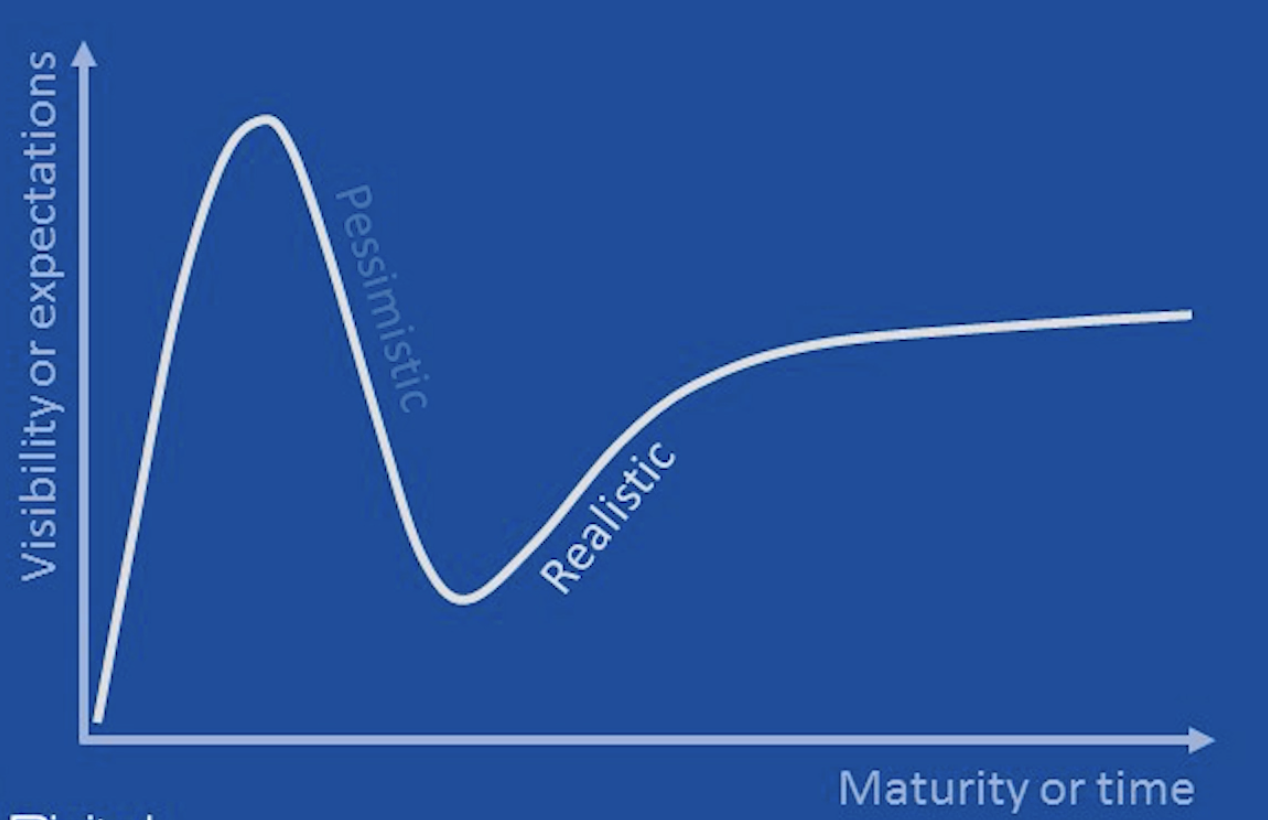
Optimistic to pessimistic view. Then realistic, more based on facts.
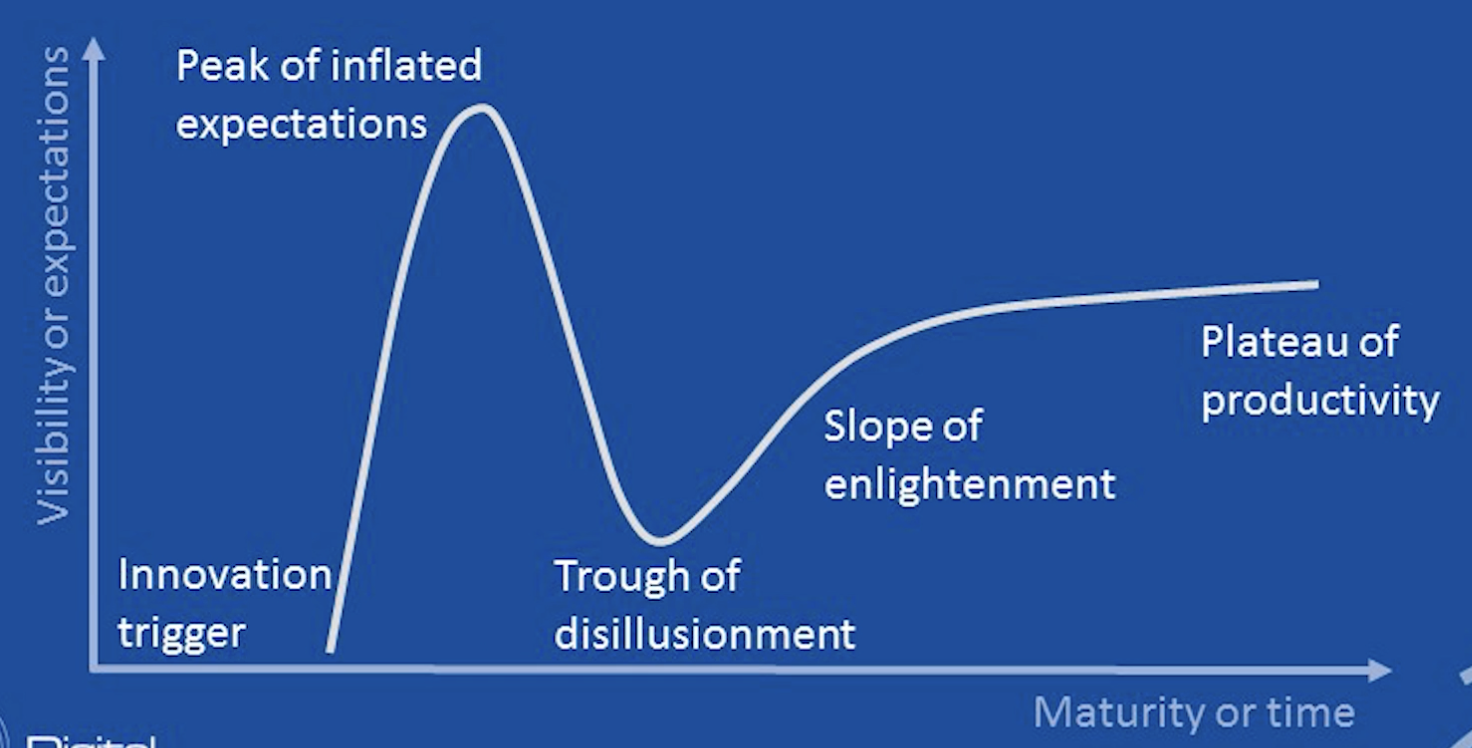
Several steps:
- Innovation trigger
- Peak of inflated expectations
- Trough of disillusionment
- Slope of enlightenment
- Plateau of productivity - established technologies
Some technologies never make it into the curve but still have a huge potential.
The hypes of technologies are always debated and we can use these debates.
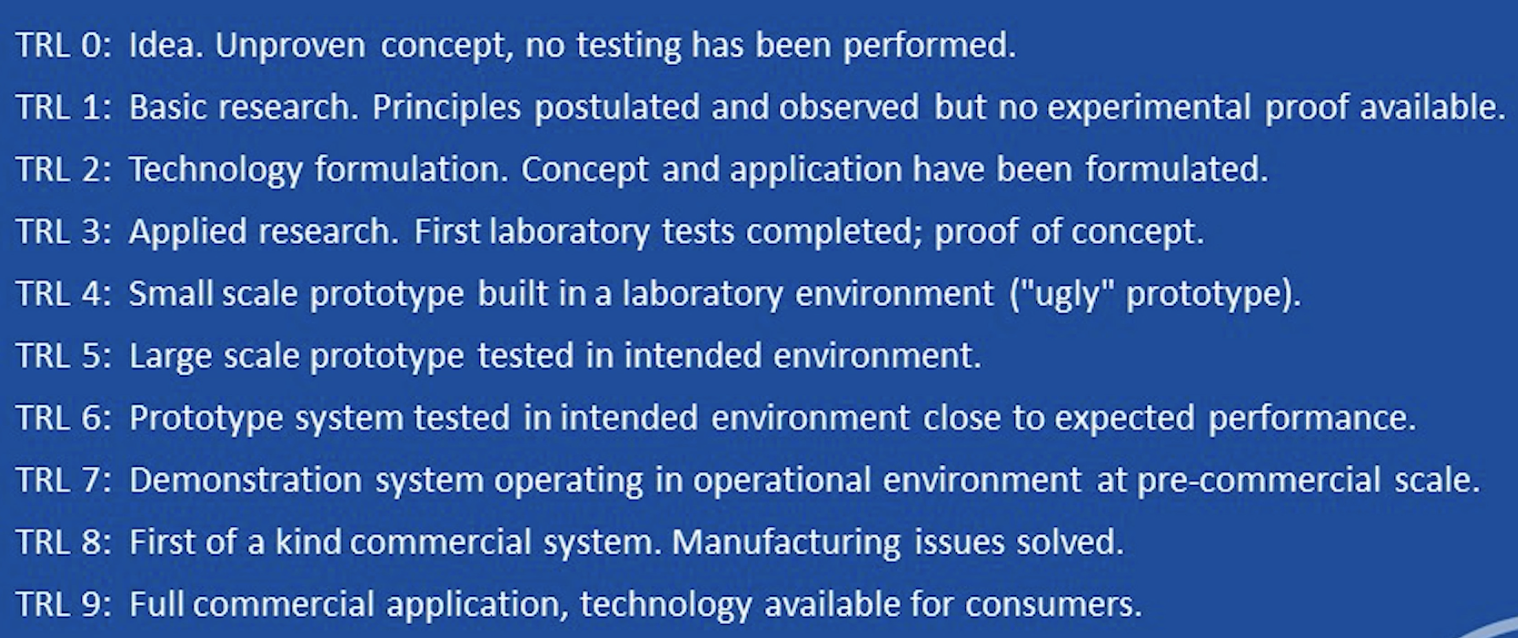
EU TECHNOLOGY READINESS LEVEL:
Barriers to change and diffusion
Barriers can be found in many areas. The main ones are:
- legal framework
- Standardisation
- Trust
- Infrastructure
- Business model
- Critical mass
- Proof of concept
- Business ecosystem
Legal framework
It's slow to change. We have to adapt to it.
Standardisation
Standardisation.
Without it, many technologies have a hard time growing and developing.
Trust
It's a matter of perseption. Takes a long time to build, and can be lost in a second.
Infrastructure
Needed for many new technologies. The technology is good, but the surrounding infrastructure is missing
Business model
There has to be value creation for every player.
Critical mass
If critical mass is not reached, diffusion is not reached. If a technology needs a volume to exist, it could get stuck. For example, we all need to have phones, for phones to be useful.
Proof of concept
If no one is ready to jump on board at early stages, there will never be new customers.
Business ecosystem
Sometimes it takes time to build
[[01.2 - Foresight - IES]]
We don't have much information about the future, so we build models to help us.
To build a model or theory, we use historical data to predict what could happen in the future

The main issue is that we don't know what we don't know.
There are all possible futures, we don't know them. There are plausible futures: can happen. Probable futures and Desired futures.

Back casting
We start from a desired future, and we work back how to get there.
Sequential back-casting
Not a desired future, but we look at where we are going with the current technology
What would the specific system in a 10-20 years perspective if we fully utilise the technology we have today?
- Create scenario
- Analyse scenario
- Define intermediate phase
- Describe phase
- Identify phase triggers
- Estimate timing
- Use the map
Demands on scenario
- Significant and difference to today
- Possible to communicate and understand
- Clear link a specific technology
- 10-20 years perspective
Develp the scenario
- 10-20 years perspective
- Today's technology fully utilised
- Trends
We need to define the intermediate phases from the present and the future. So we ask what's needed to move from a phase to an other. These are called triggers.
Then we can estimate the timing of when each phase happens.