02.3 - Research Design - IES
02.3 - Research Design - IES
It's the logic that links the data to be collected and the conclusions to be drawn to the initial questions of a study.
Main elements
configuration of 4 key design elements:
- Research problem: what motivates your research
- Theory
- Method:
- How to collect data
- How to analise data to produce results
- Data (interviews, surveys, existing statistics, participant observation)
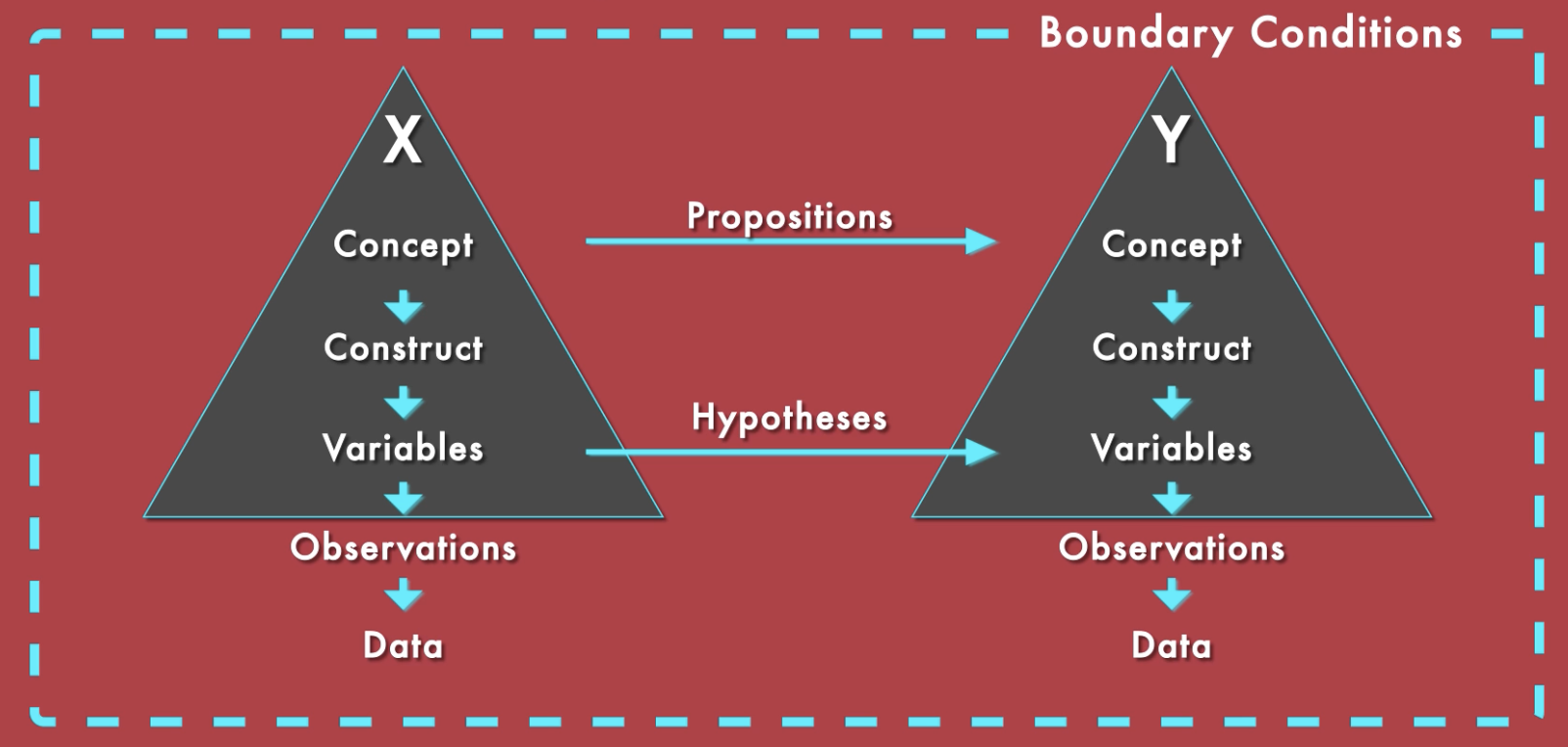
Concepts and variables
Dimensions in research design
What is the purpose of the study?
- Test a theory VS build a theory.
- The first would use deductive approach, the second would use inductive approach
What type of data are you going to use?
- Quantitative
- Qualitative
- Mixed?
For deductive studies usually quantitative data is used.
For qualitative data, we usually use a more inductive approach
Survey design VS case design
Cross sectional vs lognitudinal time frame
For the latter, a longer time frame is needed
Logic of reasoning
Conceptualisation:
Process of formulating and clarifying concepts
Operationalisation
Research operation that will specify the value or category of a variable.
Deductive reasoning
Rely on theory to define the study. From there you define the method and then collect data.
Inductive reasoning
Start from the data, then craft a method, analysie the data and consult a theory. This can be iterative process.
Generic research designs
- [[#Quantitative research design]]
- [[#Qualitative research design]]
- [[#Case research]]
- [[#Design research]]
Quantitative research design
It's any form of research where any evidence is measured or translated into numbers.
It'w usually a cross-sectional study that tests some hypothesis.
It's usually related to statistical testing. Based on hypothesis development. Analysis is based on theory and statistical tools. Usually deductive. The researcher is isolated from the studied subjects
You consult theory to prepare the hypothesis.
Qualitative research design
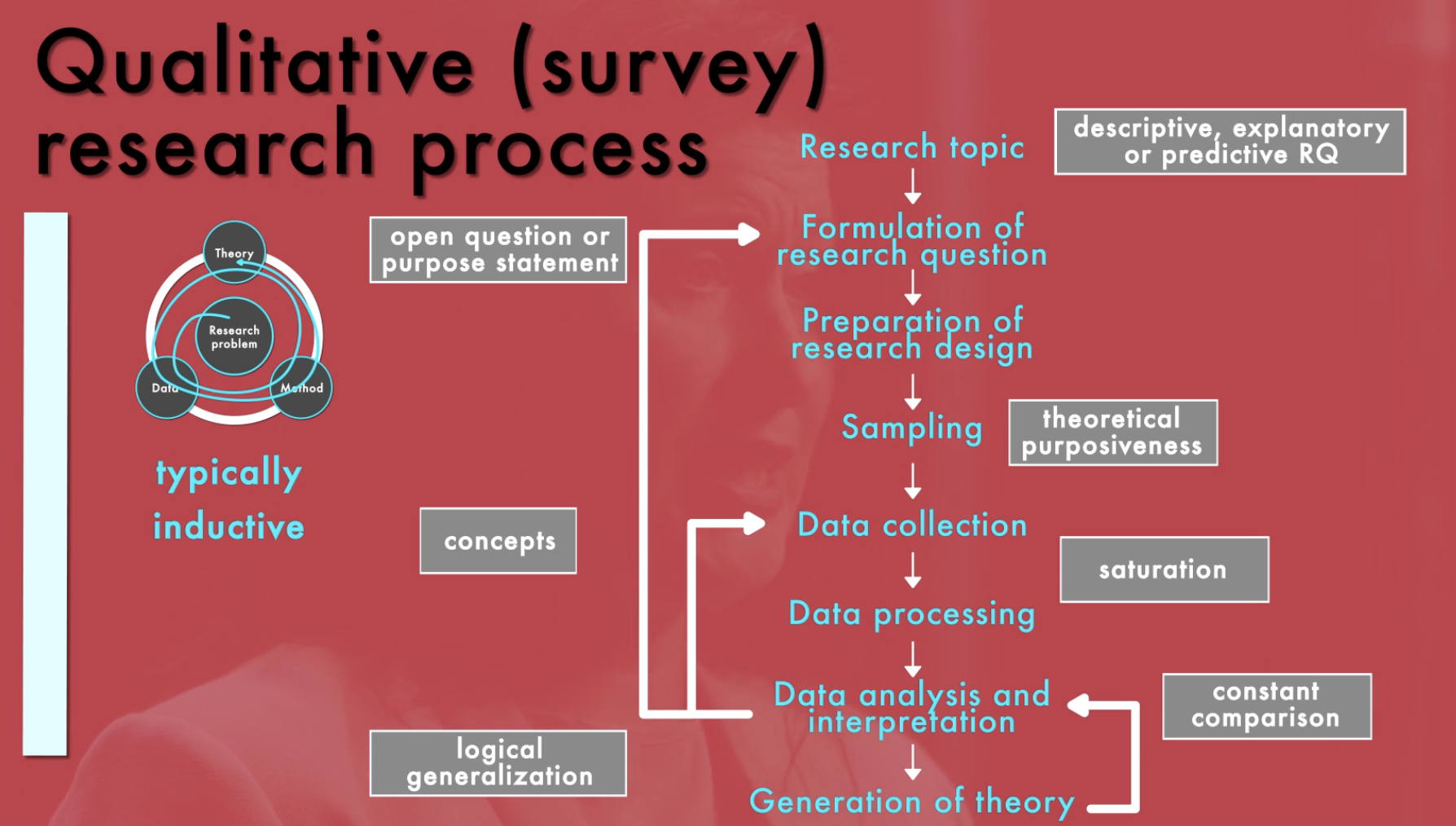
Features and process is very different from [[#Quantitative research design]]. Collecting and analysing qualitative data is extremely costly and time consuming.
You try to focus on creating a very good and representative sample.
The phases are fundamentally interconnected.
- collect some material
- begin analysis
- construct an idea of a theory
- collect more material
- keep going...
In qualitative research you usually don't start with hypothesis. Researcher has to try to remain neutral.
Starting with hypothesis would highly bias results.
The role of researcher is active and maybe participatory. It's important to avoid influencing the interviewed people.
Case research
Quantitative and qualitative surveys tend to have more informants, and you try to analyse them independently of the context. In case research, everything is analysed closely to the context.
In case research, when working with multiple cases, discoveries may imply that we need to redefine the sampling strategy.
It aims at logical generalisation, but this process is quite limited. More options in comparative research.
In single case, it's hard to generalise since concepts may not apply.
Design research
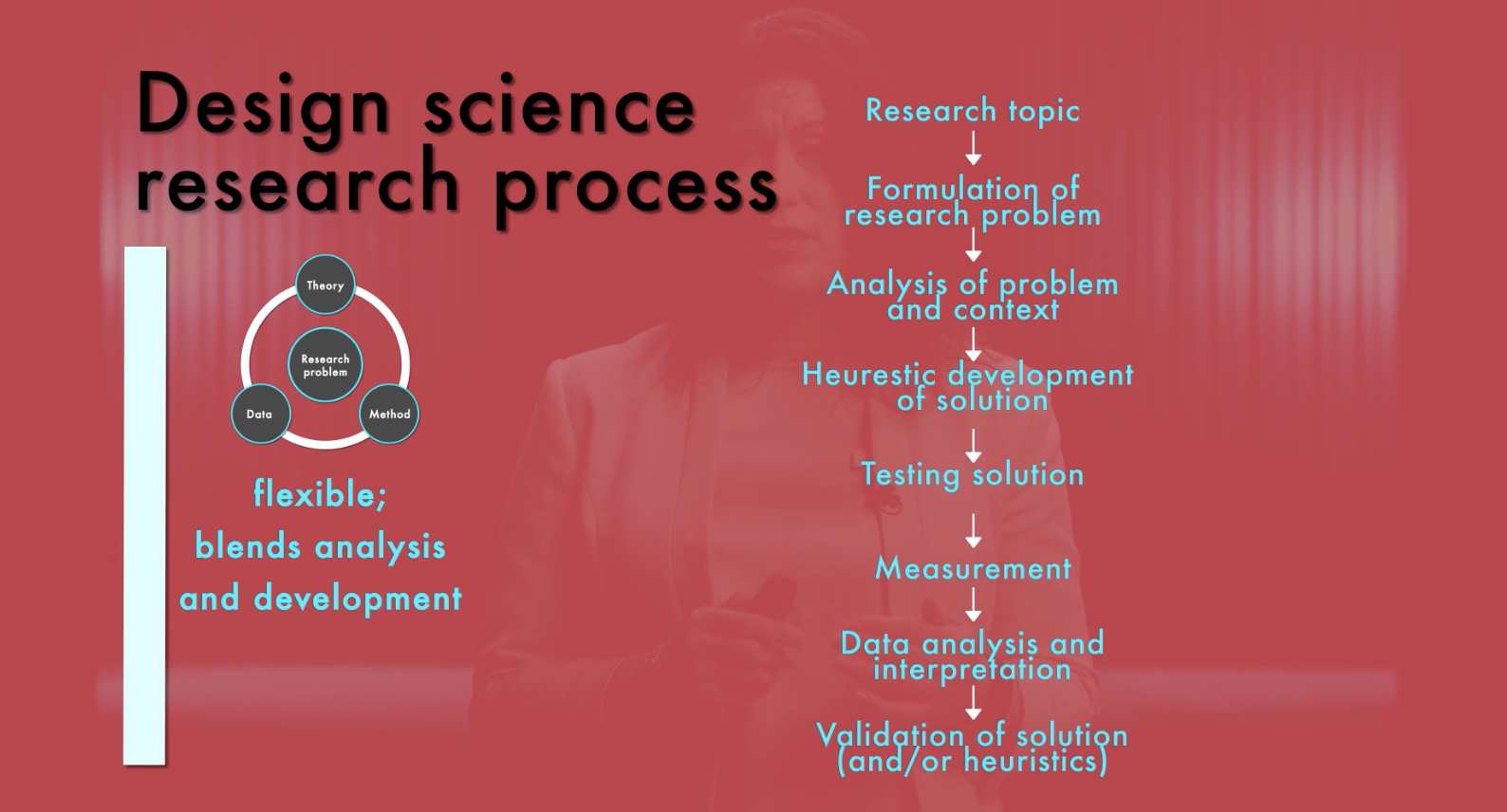
Try to form a solution to a problem applying research method.
How to research question and often technical in nature.
The process of design science is different from the other forms of research.
It's more pragmatic. Formulate topic, then problem.