01 - Spatial Planning in the Netherlands and EU - UP
01 - Spatial Planning in the Netherlands and EU - UP
The role of Spatial Planning
- Coordinates competing land uses in limited space
- Aligns public goals with private development
- Anticipates long-term needs: housing, mobility, environment
- Ensures legal certainty, fairness, and public interest
- Balances growth (or degrowth), equity, and sustainability
Planning in the Netherlands history: 1901-2010
- Housing as a core task - from social housing to urban desnification
- Shifting effort - from spreading away from Randstad to concentrating in strong areas
- Compact city ideal - concentrate growth, protect green areas
- State steering <-> decentralization - shifting balance of responibilities
- More authority to local municipalities
- Sustainability & economy integrated - linking housing, mobility, energy, ecology
The backbone: Spatial Planning System (2011-2024)
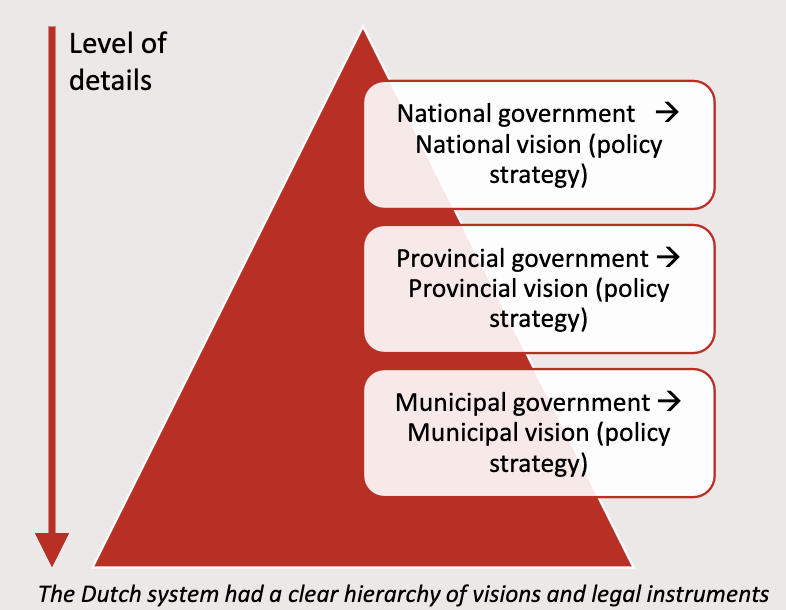
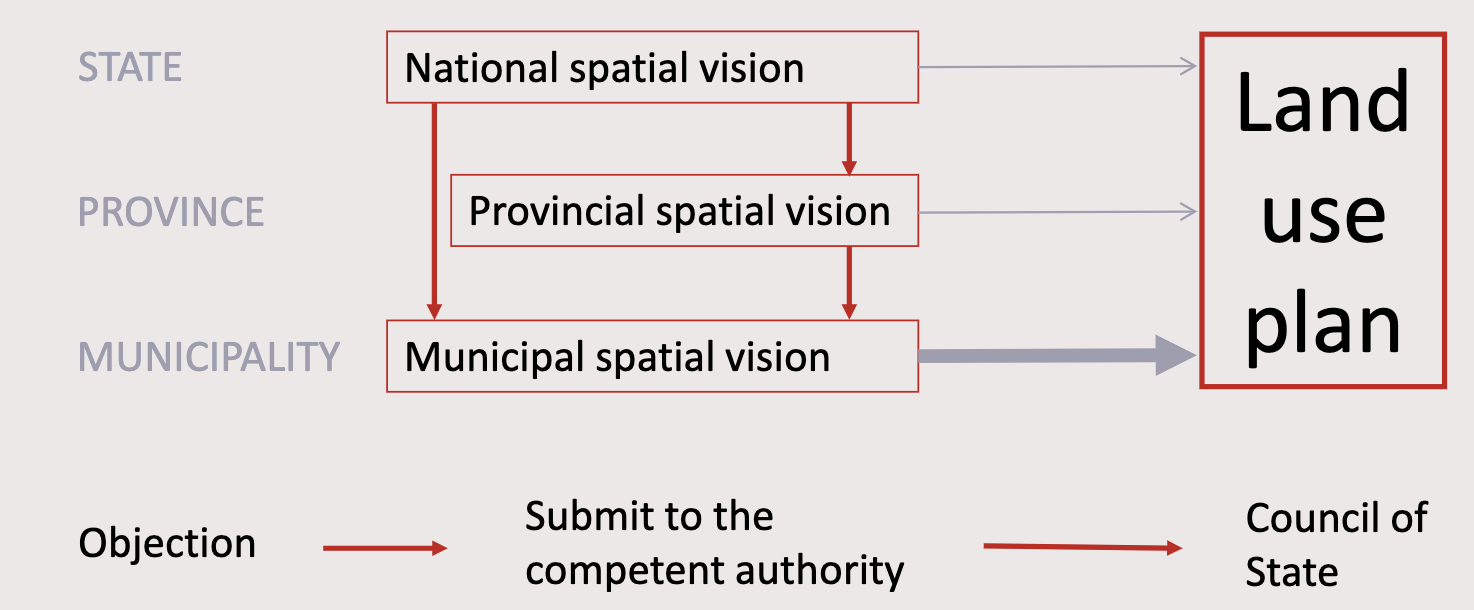
Final goal:
Come up with a land use time
- Height
- width
- land use
- ...
BUT! Land-use plan may be drawn up by national or provincial government and imposed upon a municipality. For example if a certain area is considered of national interest.
ALSO! Important role of water boards: they are separate but crucial for flood safety and water management
National policy strategy for infrastructure and spatial planning (2011)
Define a 3 steps process:
- Determine where there is a regional demand
- Infill development (including restructuring of existing locations) prior to greenfield development
- New multimodal locations prior to car-dependent sites
There is no more a national plan, now there is just a vision, guidelines.
When does the national government intervene?
- Competitiveness: attracting talent and businesses
- Accessibility: Ensuring good multimodal mobility
- Livability & safety: Crating a healthy, safe living environment
Intervention occurs when:
- National interests are at stake
- International obligations must be met
- Issues cross provincial or national borders
The next image shows the process to build a new construction:
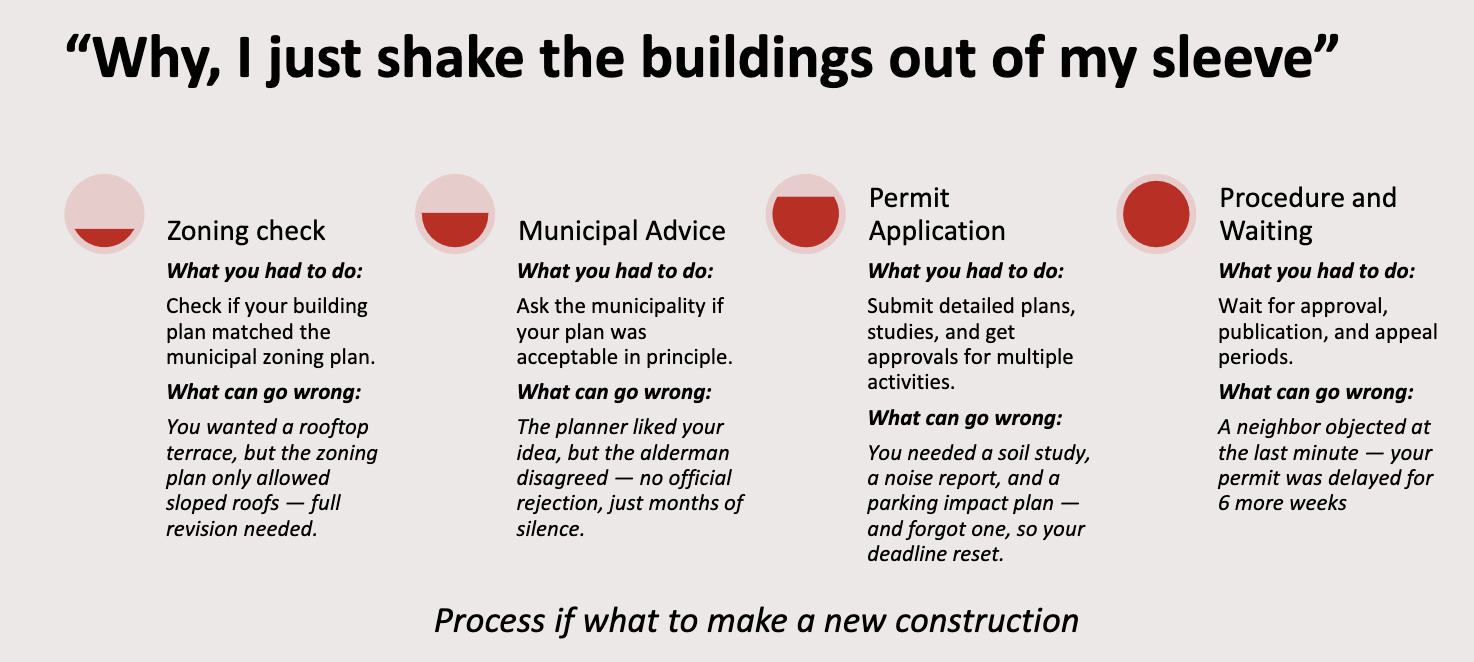
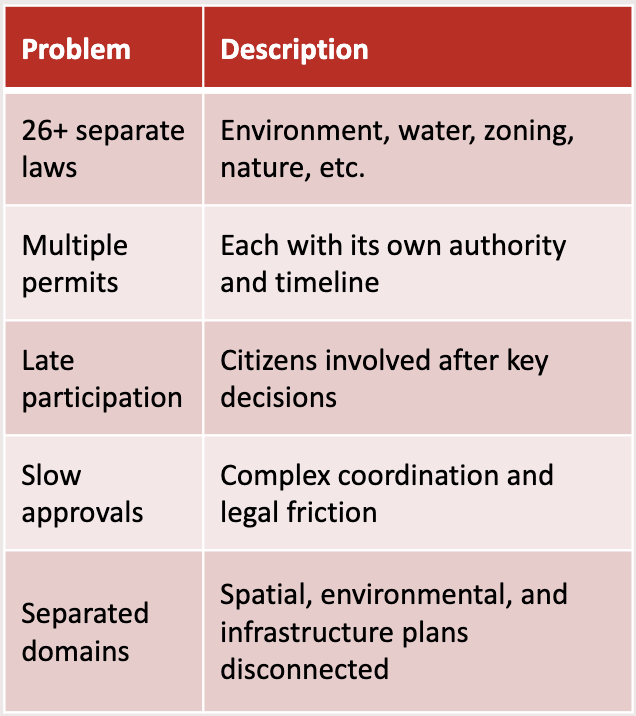
Problems with this system:
Environmental Planning
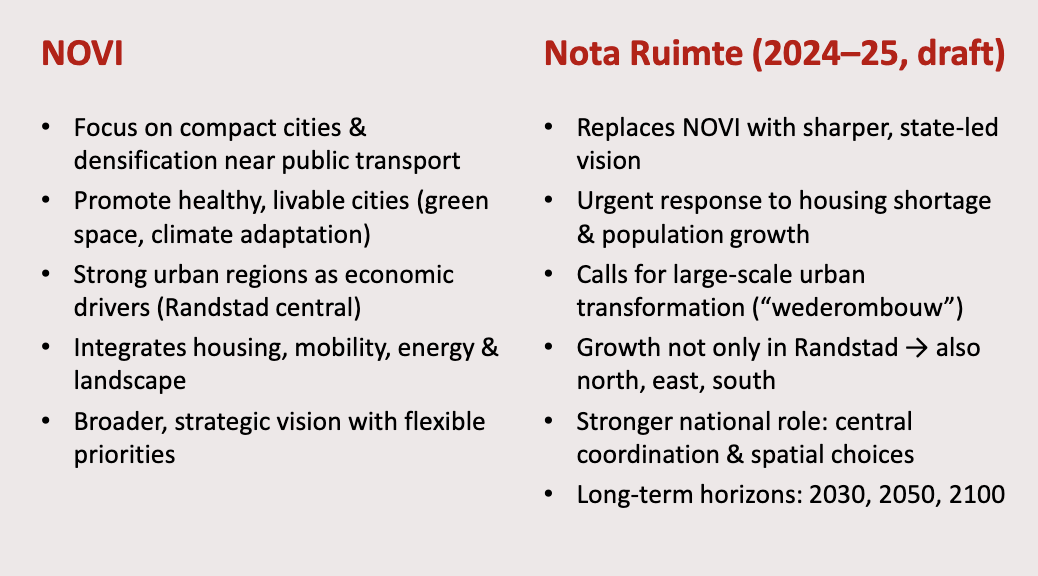
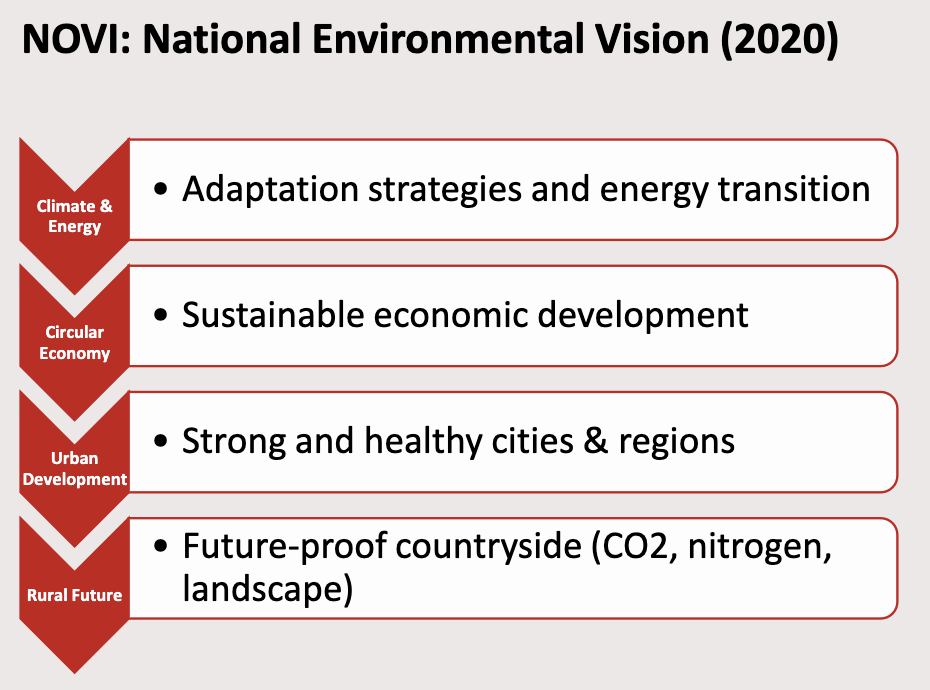
NOVI: National Environmental Vision (2020)
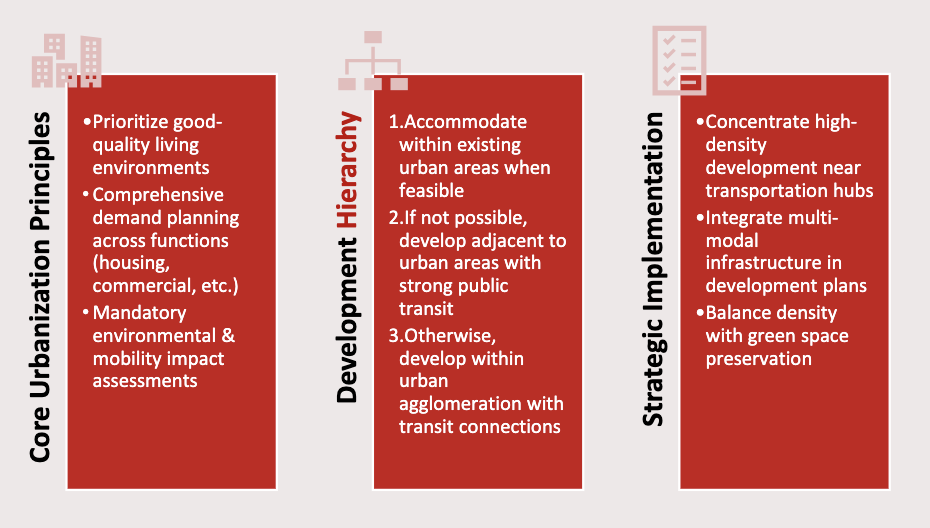
- Core urbanization principles:
- Development hierarchy
- Accomodate within existing urban areas when feasible
- If not possible, develop adjacent to urban areas with strong public transit
- Otherwise, develop within urban agglomeration with transit connections
- Strategic implementation
- Concentrate high density development near transportation hubs
- Integrate multi-modal infrastructure
- Balance density with green space preservation
Environmental assesment evolution
- Advanced start: Originally Europe's gold standard with strong safeguards
- Growing Criticism: Became viewed as slow, costly, and overly bureaucratic
- Political tension: Politicians saw delays, experts saw safeguards
- Reform results: Simplification removed safeguards but didn't necessarily accelerate planning processes
Environment & Planning Act (Omgevingswet) (2024)
Planning in the Netherlands was long seen as slow, fragmented, and overly complex. The Omgevingswet marks a cultural shift: one law for a new way of working.
- Focus: integration; simplification; decentralization
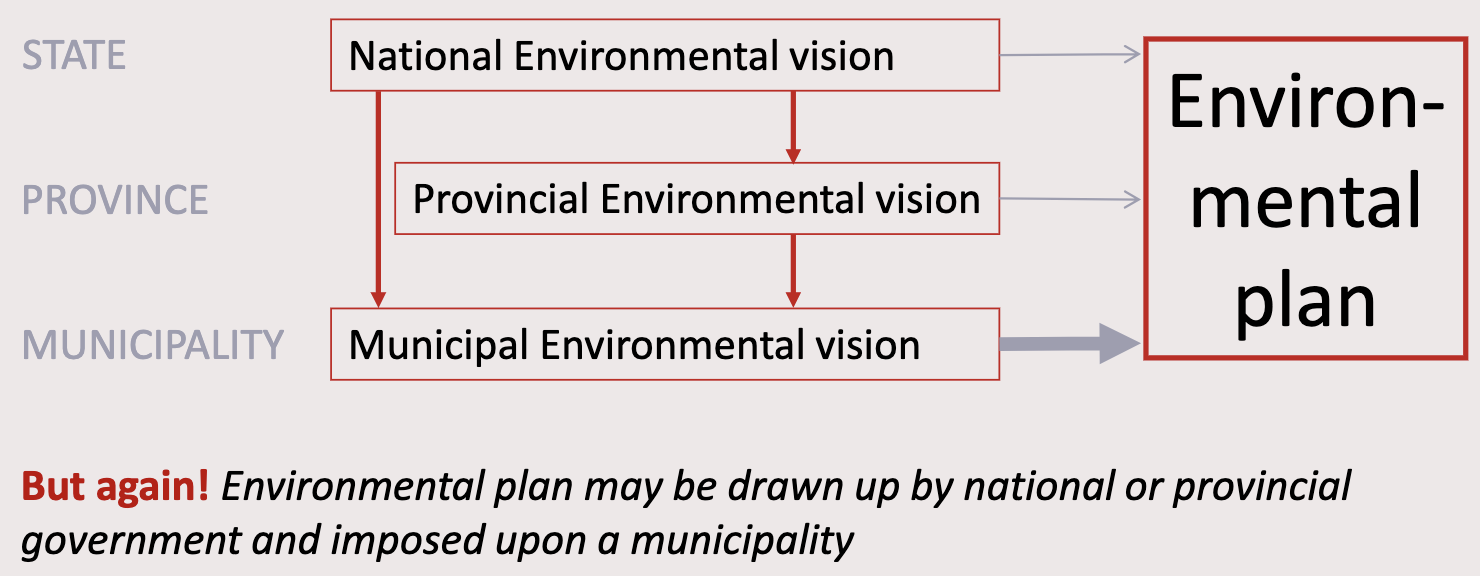
- All government levels set environmental visions and rules for area development
- From 40+ separate laws (Land use, Infrastructure, Environment, Water) → one integrated framework
- All municipal land use plans will be replaced by one environmental plan → more cohesion
- All environmental requirements are stated in the same plan/place
- Earlier citizen involvement in decisions
- Only one permit needed for complex projects
- Aligned with European directives
Future strategic planning framework